

Blog
Paired Homes vs. Townhomes: Which Daybreak Style Fits Your Lifestyle?

October 14, 2026
Both make it easier to enjoy everything Daybreak has to offer. The difference is how you want home to feel when you come back inside.
Choosing a home isn't just about deciding how many bedrooms you need, it's about deciding how you want to live.
Do you want a home with a smaller footprint that keeps things simple? Do you value having fewer shared walls? How much space do you really use? Would you rather have more home, or more freedom from maintaining it?
In Daybreak, buyers have options that make those questions especially interesting.
Traditional townhomes offer an efficient, connected style of living. Paired homes, like Destination Homes' Duets, offer many of those same advantages while moving a little closer to the feeling of a single-family home.
First, What Is a Paired Home?
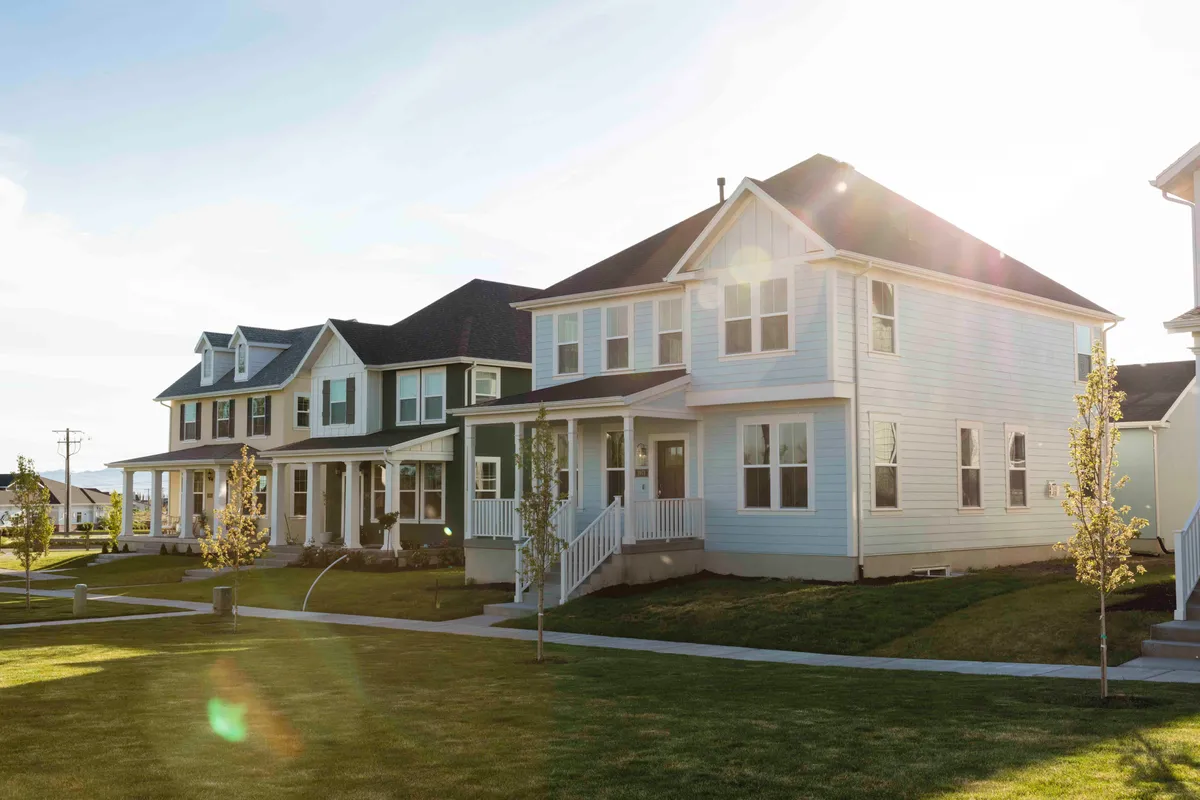
A paired home consists of two individual residences connected within one building.
Rather than a row of multiple attached residences, each home is paired with only one neighbor.
Destination Homes' Duets in Daybreak follow this concept.
You get many of the advantages associated with attached-home living, but with fewer shared walls and an architectural style that can feel more like an individual residence.
For buyers exploring paired homes in South Jordan, it's a housing style that sits comfortably between a traditional townhome and a detached single-family home.
How Is a Townhome Different?
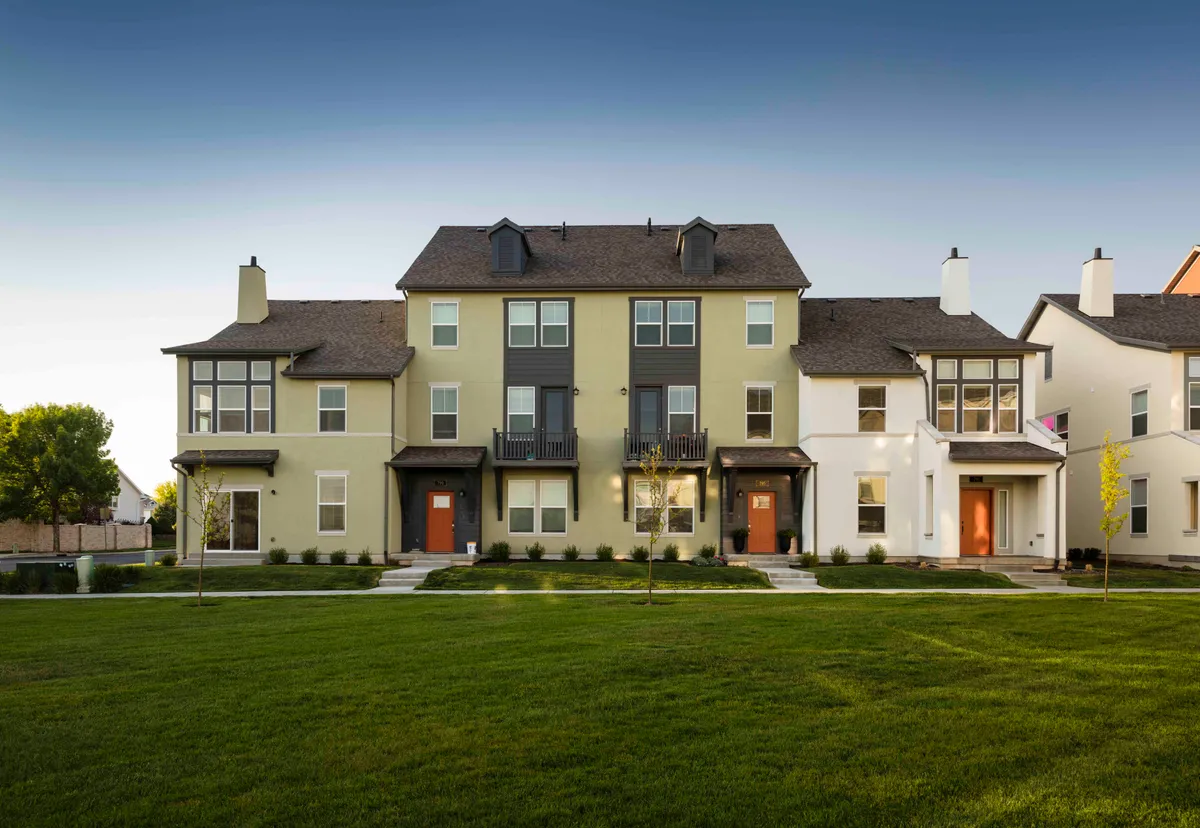
Townhomes are also individual residences that share walls with neighboring homes, but they're commonly arranged in rows containing several residences.
An interior townhome may have neighbors attached on both sides.
This efficient design allows multiple homes to fit naturally into walkable neighborhoods while still giving each homeowner their own living space and entrance.
Townhomes can be an excellent fit for people who prioritize simplicity, efficient use of space, and a lower-maintenance lifestyle.
The Biggest Difference: How Much Separation Do You Want?
For many buyers, this is where the decision starts.
A paired home has one attached neighboring residence, while a traditional interior townhome may have two. That difference can affect the number of exterior-facing walls, opportunities for windows, natural light, and the overall feeling of separation.
If you've always pictured yourself in a single-family home but don't necessarily need everything that comes with one, a paired home may feel like a natural middle ground.
If your priority is efficiency and you'd rather keep your home footprint simple, a traditional townhome may be exactly what you're looking for.
Paired Home or Townhome? Start With Your Lifestyle
It's easy to compare floor plans on paper.
- Bedrooms
- Bathrooms
- Square footage
- Garage
- Price
Those things matter, but they don't necessarily tell you which home will make you happier on an ordinary Tuesday.
If Privacy Is High on Your List
A paired home may be worth a closer look. Having only one attached neighbor can create a stronger sense of separation than an interior townhome with shared walls on both sides.
The exact experience depends on the specific floor plan and construction, but the two-home configuration is one of the biggest reasons buyers are drawn to Duets.
You can enjoy the efficiencies of attached living while getting more of the feeling of having a home that's distinctly yours.
If You Want to Keep Life Simple
A townhome can be hard to beat.
Townhome living is often attractive because the home gives you what you need without asking you to manage more space than you really use.
For first-time buyers, professionals, smaller households, or anyone who would rather spend Saturday exploring Daybreak than working around the house, that simplicity can be a major advantage. Sometimes the right amount of house is less than you originally thought.
If Natural Light Matters to You
Pay attention to how many exterior-facing walls the home has. Because a paired home is attached to only one neighboring residence, its configuration can create more opportunities for exterior windows than some interior townhomes, depending on the floor plan.
That can influence how bright and open the interior feels.
If You Want the Feeling of a Single-Family Home
This is where the Duet concept really stands out.
A paired home still shares a wall, but the two-residence design can give each home a stronger sense of architectural individuality.
Thoughtful entrances, exterior details, windows, and floor plans can make the experience feel closer to a traditional single-family residence.
For buyers who like townhome convenience but haven't quite fallen in love with traditional townhome architecture, that difference can be meaningful.
What About Space?
More space isn't automatically better.
The better question is whether the home has the right space.
A thoughtfully planned townhome can live surprisingly large because the floor plan makes efficient use of every level.
A paired home can offer another balance, giving buyers comfortable gathering spaces and separation while maintaining a manageable overall footprint.
When comparing the two, don't choose based solely on the total square footage.
Think about where the square footage is.
- Is the kitchen large enough for the way you cook?
- Can your dining area actually accommodate the people you invite over?
- Is there somewhere to work from home?
Where will you store bikes, holiday decorations, luggage, and everything else life accumulates?
The home with the better number isn't always the home with the better layout.
What About Outdoor Space?
If a huge private backyard is at the top of your wish list, neither attached housing style may offer the same experience as a detached home on a larger homesite.
But living in Daybreak changes the way you can think about outdoor space.
Instead of asking only:
“How much yard do I own?”
You can also ask:
“How much outdoor space do I get to enjoy?”
Daybreak's parks, trails, gathering spaces, recreation, and neighborhood destinations extend life well beyond your own property.
For some buyers, having less private exterior space to maintain is a feature, not a compromise.
The Daybreak Lifestyle Comes With Both
One of the nice things about comparing paired homes and townhomes within Daybreak is that you don't necessarily have to choose between two completely different lifestyles.
The community itself remains a big part of the experience.
Daybreak is designed around connected neighborhoods, walking and biking, parks, community gathering places, and destinations that encourage residents to get outside.
That means your decision can focus more on the home itself.
- How much privacy do you want?
- How much space?
- What type of layout?
Your neighborhood is already doing a lot of the heavy lifting.
Which Is Better for First-Time Buyers?
Both can make sense.
A townhome may appeal to a first-time buyer who wants to prioritize an efficient floor plan and manageable homeownership experience.
A paired home may appeal to someone who wants many of those same advantages but is drawn to additional separation and a more single-family-like feel.
The better option depends on your budget, available homes, financing, desired space, and lifestyle.
First-time buyers shouldn't automatically assume they need to start with the smallest home available.
But they also shouldn't feel pressured to buy more home than they need.
Start with your life.
Then find the home that fits it.
Which Is Better for Growing Households?
Again, look at the floor plan rather than the label.
A growing household might value bedrooms separated from main living areas, flexible space for homework or working from home, storage, a functional kitchen, and easy access to outdoor recreation.
Both paired homes and townhomes can provide those things depending on the design.
Tour the home imagining what life might look like three or five years from now—not just what works today.
A good home should have enough flexibility to evolve with you.
Which Is Better for Empty Nesters or Right-Sizers?
For someone moving out of a larger single-family home, a paired home can offer an appealing transition.
You may want less property to manage without feeling like you're giving up the individuality of having your own home.
A townhome can take that simplicity even further.
What matters is identifying which parts of your current home you actually use and which parts you're maintaining simply because they're there.
Right-sizing isn't about having less.
It's about keeping more of what matters.
What About Maintenance?
Maintenance expectations can vary by community, home type, and association, so buyers should review the specific responsibilities associated with any home they're considering.
Generally, one reason buyers consider attached and paired housing is the opportunity for a more manageable homeownership experience.
Before buying, ask exactly what you're responsible for maintaining and what may be handled through the applicable community or association.
Don't assume all townhomes—or all paired homes—work the same way.
Understanding those responsibilities upfront makes it much easier to compare the true lifestyle of each option.
What About HOA Fees?
HOA and community fees can vary depending on the home and neighborhood.
Rather than looking at the fee alone, understand what it covers.
Ask which exterior or community responsibilities are included, which amenities are supported, and which costs remain yours.
Then compare that with what you would otherwise spend or maintain yourself.
The goal isn't necessarily to find the home with the smallest fee.
It's to understand what you're receiving in return.
Does One Cost More Than the Other?
Pricing depends on the specific home, floor plan, location, size, included features, available incentives, and current market conditions.
That's why broad statements about paired homes always costing more—or townhomes always being the least expensive choice—can be misleading.
Compare actual available homes.
More importantly, compare what you're getting for the price.
A home that costs a little more but provides the space or privacy you were planning to move for in a few years could have more value to you.
A smaller home that leaves more room in your monthly budget could be the better choice for someone else.
Your lifestyle belongs in the calculation.
New Construction Gives You a Different Starting Point
Whether you're considering a townhome or Duet, buying new gives you something that's difficult to replicate with resale:
A clean beginning.
You aren't inheriting someone else's renovation choices or immediately creating a list of projects you need to undo.
Contemporary floor plans are designed around the way people live now, and new-home systems and materials mean you're beginning at the start of the home's story.
Depending on the home and construction stage, there may also be opportunities to choose certain design elements and make the space feel more like yours from day one.
What We Think Buyers Should Pay Attention to During a Tour
The best way to choose between a paired home and a townhome is to stop thinking about the labels once you walk through the front door.
Imagine your normal day.
Where do you drop your keys?
Where does everyone gather?
Where would you work?
Where would guests stay?
Where do you put all the stuff you don't want sitting out?
Then notice the less obvious details.
Natural light.
Shared walls.
Storage.
Stairs.
Views.
Privacy.
Distance to the places in Daybreak you'll use most often.
Those details will probably tell you more about which home fits than a feature checklist ever could.
Paired Homes vs. Townhomes at a Glance
If your priority is fewer shared walls and more of a single-family-home feeling, start by exploring a paired home.
If your priority is efficient living and a simple, connected home, a traditional townhome may be the natural fit.
If your priority is Daybreak itself, you may find that both give you what you're looking for—the real decision becomes which floor plan feels most like you.
That's why we don't think the question should be:
“Which home type is better?”
It should be:
“Which home type makes my everyday life better?”
The Destination Homes Approach
At Destination Homes, we don't believe every household needs the same kind of home.
Some people want more space.
Some want less.
Some want a traditional townhome.
Some want something that sits between attached living and a detached home.
What matters is creating homes with thoughtful architecture, useful spaces, and enough personality for the people living inside to make them their own.
That's what the Duets bring to Daybreak.
They're another way to live in a community people love without forcing your lifestyle into a one-size-fits-all home.
Bottom Line
Paired homes and townhomes share some important advantages.
Both can provide efficient spaces, a more manageable homeownership experience, and access to the connected Daybreak lifestyle.
Where they differ is in the feeling.
Traditional townhomes lean into efficient, connected living.
Destination Homes' Duets pair only two residences together, creating more of the separation and individuality many buyers associate with single-family homes.
Neither choice is universally better.
The right home is the one that gives you the space you need, the lifestyle you want, and room for whatever comes next.
Explore both.
Walk the floor plans.
Imagine your life there.
Then choose the place where you're ready to Add Your Story.
Frequently Asked Questions
What is the difference between a paired home and a townhome?
A paired home consists of two attached residences, while traditional townhomes are commonly built in rows with multiple residences. This means a paired home has only one attached neighboring residence.
Are paired homes more private than townhomes?
A paired home's two-residence configuration means it has only one attached neighboring home, which can create a different sense of separation than an interior townhome. Actual privacy and sound transmission also depend on the floor plan, construction, and location.
Are paired homes good for first-time buyers?
They can be. Paired homes may appeal to first-time buyers who want a manageable home but prefer fewer shared walls and more of a single-family-home feeling. The right choice depends on budget, financing, available homes, and lifestyle.
Are paired homes part of an HOA?
Association structures, responsibilities, and fees depend on the specific community and home. Buyers should review current association documents and ask what is included before purchasing.
Where can I find paired homes in South Jordan?
Destination Homes' Duet concept offers paired-home living in Daybreak in South Jordan, Utah. Current availability, floor plans, pricing, and incentives can change, so buyers should review Destination Homes' current Daybreak offerings.